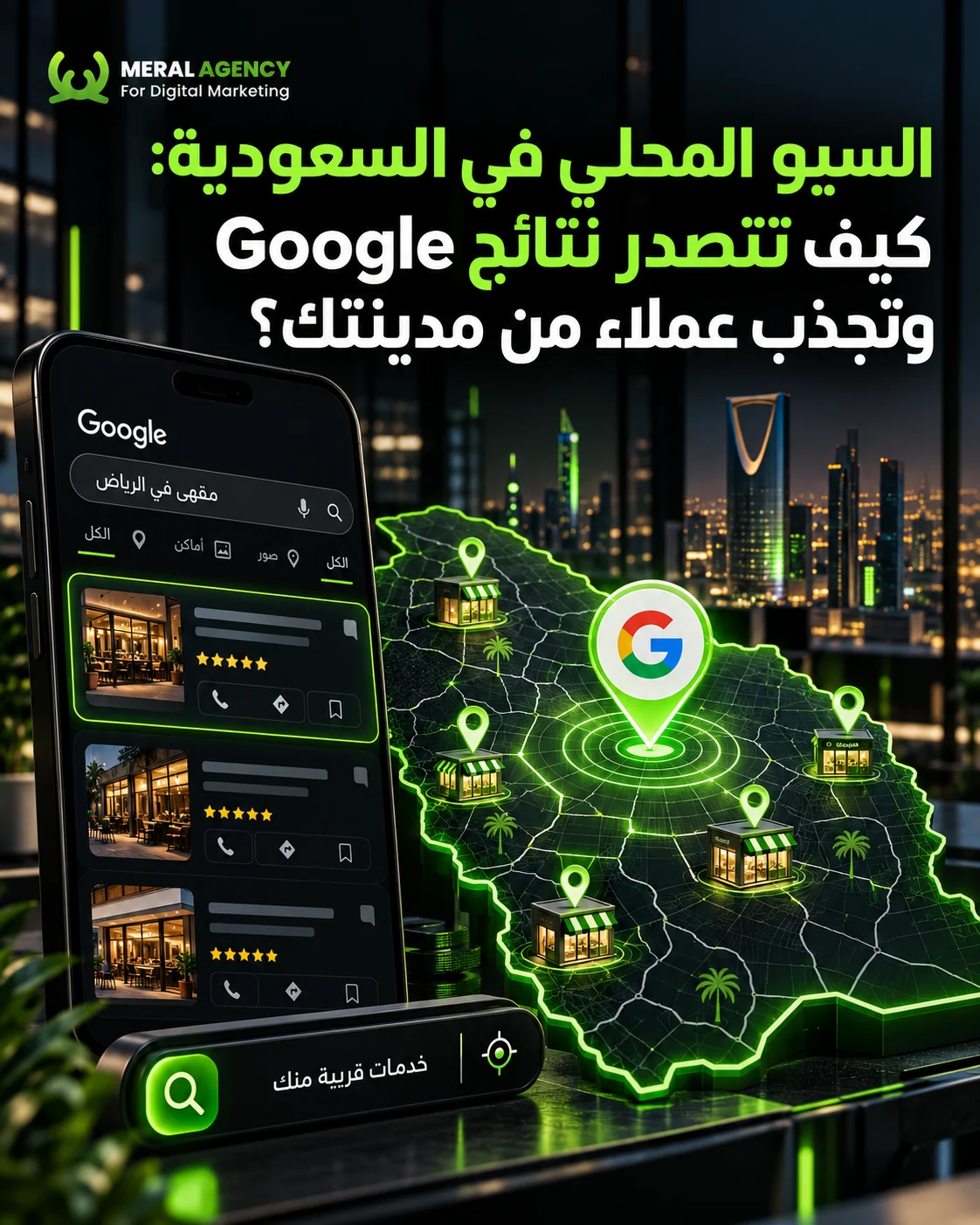
Local SEO in Saudi Arabia: How Can You Rank at the Top of Google Search Results and Attract Customers from Your City?
Local SEO in Saudi Arabia is the strategy that helps your business appear to people searching for a service or store near them—right when they’re ready to reach out or visit. When a customer types “dental clinic in Riyadh,” “cleaning company in Jeddah,” or “coffee shop near me,” they don’t want a generic list of websites; they want a result that’s relevant to their location, trustworthy, and easy to contact.
That’s why it’s not enough to just have a nice website or active social media accounts. Google needs to understand where your business is located, the services you offer, the areas you serve, and how much customers trust you. Additionally, your name, address, phone number, and business hours must be consistent across your website, business profile, and other platforms.
This guide offers a practical plan tailored to businesses, clinics, stores, restaurants, and service providers in the Saudi market. You’ll learn about local ranking factors, how to optimize your business profile, create city pages, manage reviews, and track calls, trends, and orders—rather than just monitoring visits.
What is local SEO in Saudi Arabia?
Local SEO is a set of optimizations that help search engines connect a specific business to a search query with intent and a geographic location. The result may appear on Google Maps, in the local pack displaying multiple businesses, or in regular organic results. In all cases, the customer must find accurate information that builds their trust in the result and prompts them to take a clear action.
This type of SEO differs from general search engine optimization. An informational article may target readers from many countries, while a local page targets someone searching for a service in a specific city or neighborhood. Therefore, a successful strategy combines a complete business profile, strong website pages, a trustworthy reputation, and consistent location signals.
How does Google determine the ranking of local results?
Google’s official guidelines for local ranking explain that results are primarily based on three factors: relevance, distance, and popularity. These factors work together, and there is no legitimate way to buy a higher position in local results. Therefore, a business should optimize the factors it can control rather than look for a quick fix.
Relevance to the Searcher’s Intent
Relevance refers to how well the business’s information matches what the customer is searching for. Choosing the correct category, clearly listing services, filling out the description and attributes, and creating accurate service and city pages all help Google understand the business. However, repeating keywords in the name or description does not make up for missing information and may violate policies if it does not represent the business’s actual name.
Distance Between the Customer and the Business
Distance is calculated based on the searcher’s location or the location Google infers from the search query. A business cannot change its location to match every search, but it can clarify its actual location and service areas and avoid creating fake addresses. If the business visits customers rather than receiving them at a physical location, the service area must be set according to the actual business model.
Online Reputation and Trust
Reputation reflects how well-known the business is and the presence of credible references to it on the web. This includes links, articles, and mentions of the business name, as well as the number and quality of reviews. Therefore, a local reputation grows from good service and a consistent experience, not from a short-lived review campaign followed by complete inactivity.
Local SEO in Saudi Arabia Starts with an Accurate Business Profile
The business profile is the first thing many customers see before visiting the website. You must verify ownership, use the real name as it appears on your sign and official documents, and select the most accurate primary category. Then add only the necessary secondary categories, along with your address or service area, phone number, website link, and business hours.
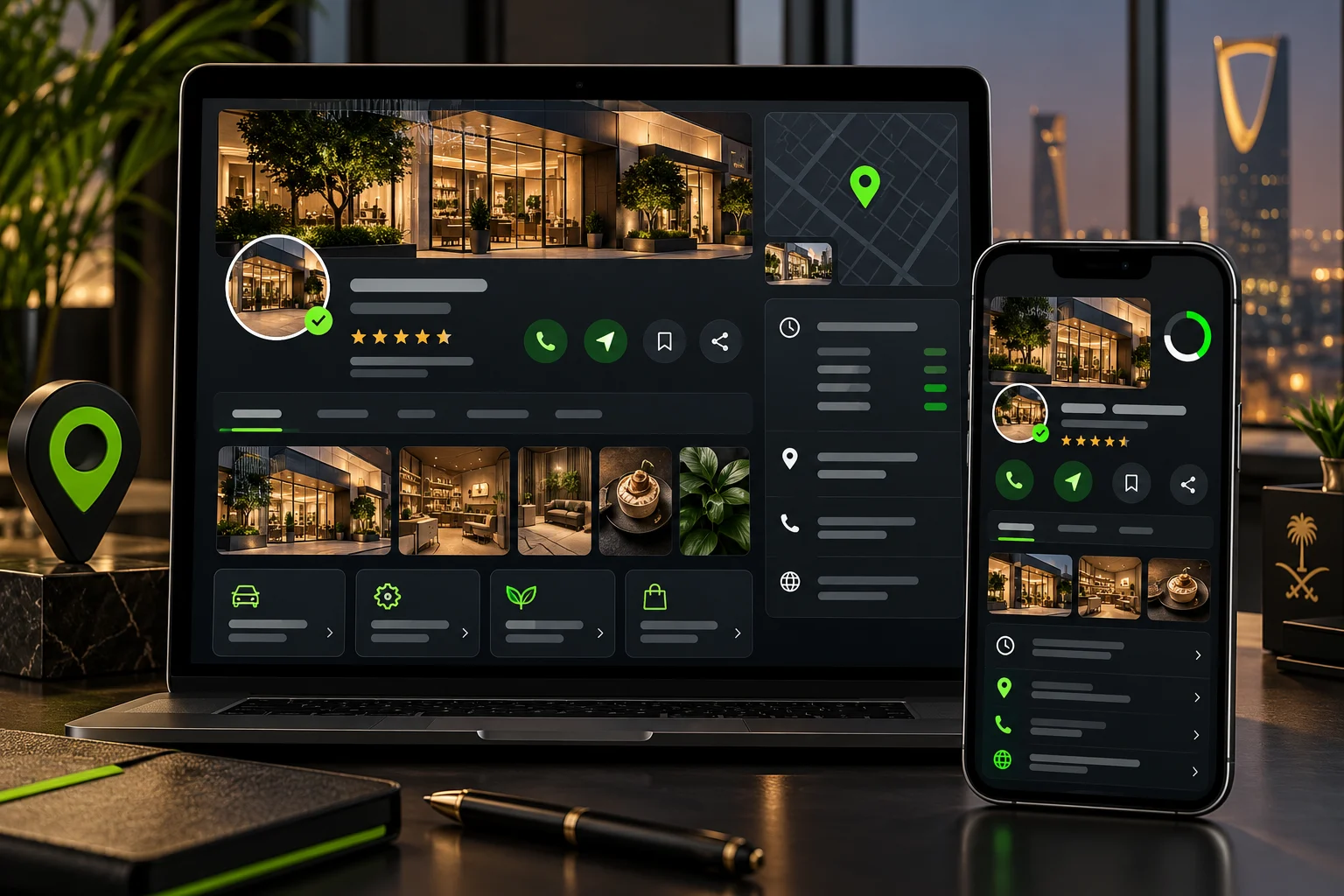
Write a description explaining what you offer and to whom, without temporary promotions or exaggeration. Then add the available services and products, original photos of the location, team, and work, and update the hours for special events and holidays. For companies with multiple branches, each branch must have the necessary qualifications and accurate information, along with its own website page.
Business Profile policies require that information and content accurately represent the location. Therefore, avoid names stuffed with keywords, unverified virtual locations, and phone numbers that do not reach the business. Violations may result in a brief boost in visibility, but they put the listing at risk of being modified or suspended.
Choosing Keywords for Local SEO in Saudi Arabia
Start with the language your customers use, not your company’s internal jargon. Combine service, city, neighborhood, problem, and modifier phrases, such as “corporate lawyers in Riyadh,” “air conditioner repair in North Jeddah,” or “nearby dermatology clinic.” Then categorize the keywords by intent: information, comparison, contact, booking, or visit.
Not every phrase needs its own page. If the keywords refer to the same service and city, a strong page can naturally cover them. However, if the service, customer experience, or region differs significantly, it may warrant a separate page. The goal is to create the best answer, not to duplicate pages by simply changing the city name.
Manually review search results from multiple devices and locations, as results may vary based on distance and history. Also, examine frequently asked questions, calls, and customer messages. These sources reveal valuable keywords that may not be obvious in search tools.
City and Service Pages That Deserve to Be Featured
A city page should answer local customers’ questions: What is the service? Who provides it? Where is it provided? What are the hours or how does it work? And how do I make a reservation? Include examples or projects from the area when applicable, along with original photos, frequently asked questions, and a map or directions if there’s a physical location that serves customers.
Write a clear title and a descriptive summary that encourages clicks without exaggeration. Use a short URL, one H1 heading, and organize the sections with H2 and H3 headings. The page should also be fast and responsive, with contact, booking, and directions buttons clearly visible on mobile devices.
Avoid copying the same page for dozens of cities and simply replacing the name. This approach provides a poor user experience and does not demonstrate a genuine presence. Instead, create pages for the areas you can actually serve, and add unique local value to each page.
Local SEO in Saudi Arabia and the Mobile Experience
A large percentage of local searches begin on a mobile phone and quickly turn into a call, a directions request, or a message. Therefore, your phone number must appear as a clickable link, the contact form should be short, and the map must load correctly. Additionally, pop-up windows should not cover the content or the call-to-action button.

Test the page on an average connection, not just on a fast office network. Click every button, submit a test form, and make sure the sales team receives the request. Ranking first is useless if the phone goes unanswered or the form ends up in a junk folder.
Consistency in Name, Address, and Phone Number
Search engines and customers need consistent data. Use the same format for the name, address, and phone number on your website, business listing, and relevant platforms. Minor variations in formatting are acceptable, but changing your business name, branch number, or listing an outdated address creates confusion and undermines trust.
Create a spreadsheet listing the sources that mention your business, then review it periodically. Start with the primary, trusted sources in your industry or city, and don’t purchase hundreds of random listings. Quality and accuracy are more important than quantity, especially when some listings are outdated or unrelated to the Saudi market.
Local SEO in Saudi Arabia and Review Management
Ask for a review after a genuine experience and at an appropriate time, such as upon completion of a service or receipt of a product. Make the review link easy to access, but do not buy reviews or offer incentives in exchange for positive feedback. Ask all customers for honest feedback, as selectivity undermines credibility and may violate policies.
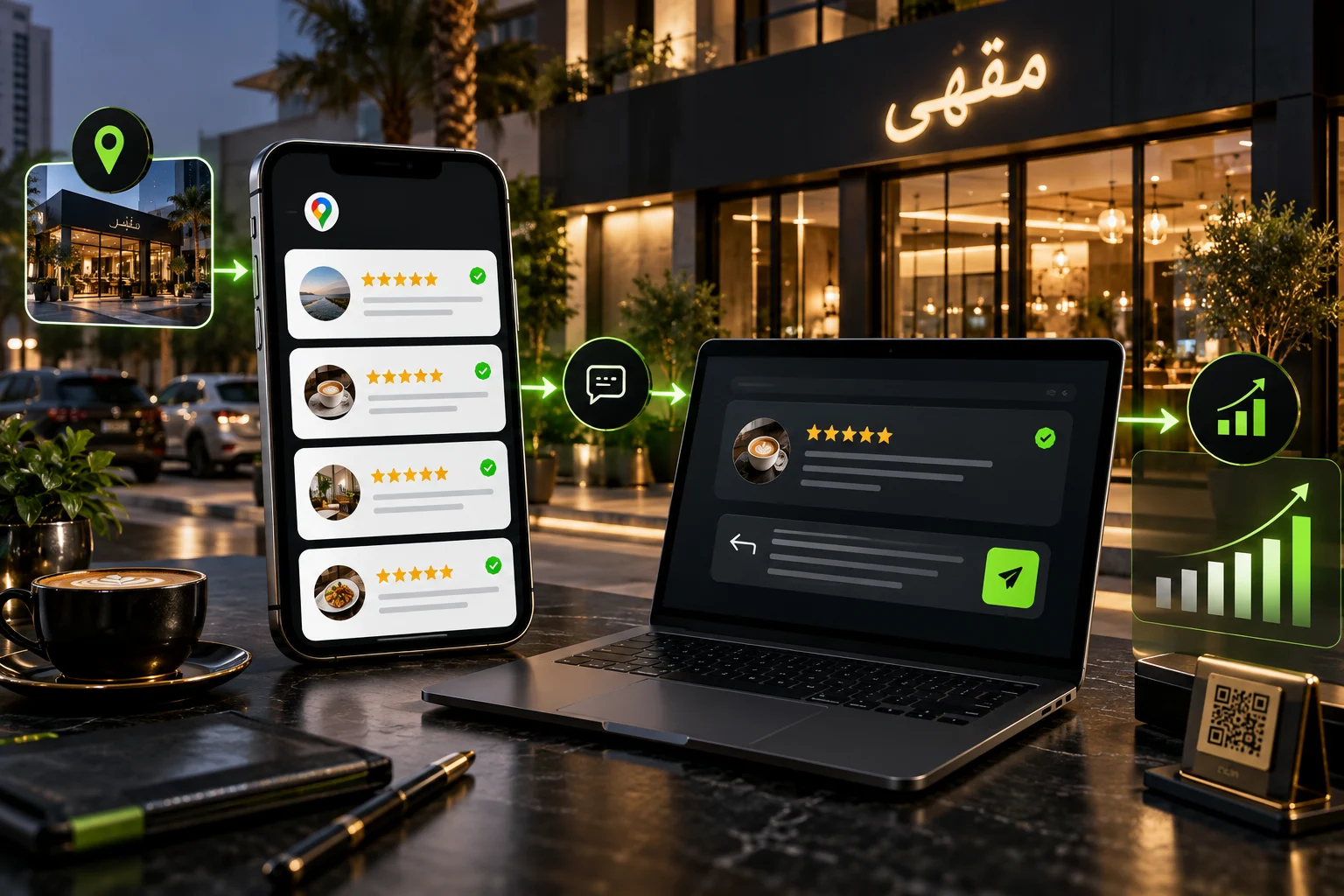
Respond to reviews in a professional tone. Thank the customer for positive feedback, and in the event of a complaint, acknowledge the experience and ask for details via a private channel without disclosing personal information. Do not engage in public arguments, and do not use a one-size-fits-all automated response. A good response matters just as much to the next reader as it does to the reviewer.
Analyze recurring themes in the reviews. If customers consistently mention fast service, this is a strength worth highlighting. If there’s a recurring issue with scheduling or communication, an operational solution will improve your reputation more than any content campaign.
Local Content and Relevant Links
Local content can answer real questions specific to the city or industry: a service selection guide, price differences, booking requirements, or common mistakes. Link the article to the appropriate service page, and add links from relevant pages to the website or branch page. This helps both customers and search engines understand the site’s structure.
Look for PR opportunities and credible partnerships, such as industry associations, city events, or genuine suppliers and partners. Don’t make buying links your goal; instead, aim to provide news or resources worth highlighting. Local presence can be bolstered by a social media management strategy that showcases local businesses and stories and drives traffic back to the website.
Structured Data for Local Activity
Structured data LocalBusiness clarify the business’s name, address, hours of operation, phone number, and location for search engines. Google Search Central documentation recommends using the most specific type, adding the required and appropriate properties, and then verifying the markup with the Rich Results Tool.
However, structured data should not create information that does not exist on the page, nor should it include fake reviews. The data must match what the user sees. After publishing, check the page in Search Console and ensure it is indexable and not blocked by site settings.
How do you measure local SEO results in Saudi Arabia?
Don’t make ranking alone the sole indicator of success, as it varies depending on the searcher’s location and device. Track the number of calls, directions requests, website clicks, forms, bookings, and sales. Also monitor the search terms for which your pages appear in Search Console, the pages receiving local traffic, and the conversion rate from each city.
Use tracking numbers or campaign parameters when appropriate, without changing the main number in a way that disrupts consistency. Ask new customers how they found you, then link the results to your customer management system. This way, you’ll know whether local visibility is driving meaningful inquiries or just impressions.
Compare results over reasonable time periods. Changes may take time to be indexed, so avoid modifying names, categories, and pages every day. Monitor trends monthly, but check the underlying data and file integrity weekly.
A 90-Day Local SEO in Saudi Arabia Implementation Plan
- First Two Weeks: Audit the profile, website, duplicate data, tracking, and actual competitors.
- Weeks 3 and 4: Correct the name, address, phone number, categories, hours, images, and services.
- Second Month: Optimize service pages, city pages, mobile experience, internal linking, and structured data.
- Third Month: Launch the review request system, publish local content, build partnerships, and measure leads.

Priorities vary depending on the status of the business. If the listing is suspended or the data is incorrect, start with compliance and accuracy. If the foundation is strong but traffic is low, review keyword intent, landing pages, and conversion experience. Miral Agency can integrate these steps into a comprehensive marketing plan that links visibility to content, advertising, and sales.
Errors That Prevent the Business From Appearing Locally
- Adding keywords to the business name that do not actually appear.
- Using a default address or an ineligible branch.
- Selecting a general category and leaving services, images, and hours incomplete.
- Creating duplicate and weak city pages.
- Purchasing reviews or soliciting positive reviews in exchange for a reward.
- Failing to respond to calls and forms generated by search results.
- Tracking views without linking them to bookings or sales.
Some companies also make the mistake of changing their strategy based on a single search from the manager’s device. It’s essential to analyze a broader range of websites, keywords, and business results, then determine what needs technical fixes, content updates, or operational improvements.
Frequently Asked Questions About Local SEO in Saudi Arabia
How long does it take to see results?
The timeframe depends on the profile’s status, the website, competition, and the history of activity. The effects of data corrections may appear quickly, while building pages, reputation, and backlinks can take months. It’s best to track early indicators such as profile completion and indexing, followed by business metrics like calls and bookings.
Does the company need a physical location?
The listing must match the business model and eligibility requirements. Businesses that serve customers on-site display their actual address, while some service-area businesses can hide their address and specify the areas they serve. Businesses that operate exclusively online are typically not eligible for a business listing.
Do ads improve organic local rankings?
Ads and organic results are two different systems, and paying for ads does not guarantee a higher local ranking. However, a business can use ads to attract immediate leads while building its SEO foundation, and then compare the quality of customers and the cost of each channel.
Can multiple branches be managed under a single strategy?
Yes, while maintaining accurate data, pages, and profiles for each branch. Use standardized metrics for quality and measurement, but allow room for differences in services, hours, images, and local content. Do not copy one branch’s experience to another without verification.
Conclusion: Turn Local Visibility into Real Leads
Local SEO in Saudi Arabia succeeds when it combines accuracy, relevance, trust, and a seamless conversion experience. Start with a correct business profile, a fast-loading website, and helpful pages, then continuously build up local reviews and citations. Next, measure calls, reservations, and sales—not just the number of impressions.
Miral Marketing Solutions helps companies refine their local presence, optimize their website and business profile, create content, and track results using clear dashboards. The goal isn’t just to appear on the map—it’s for the right customer to find you, trust you, and take the next step.